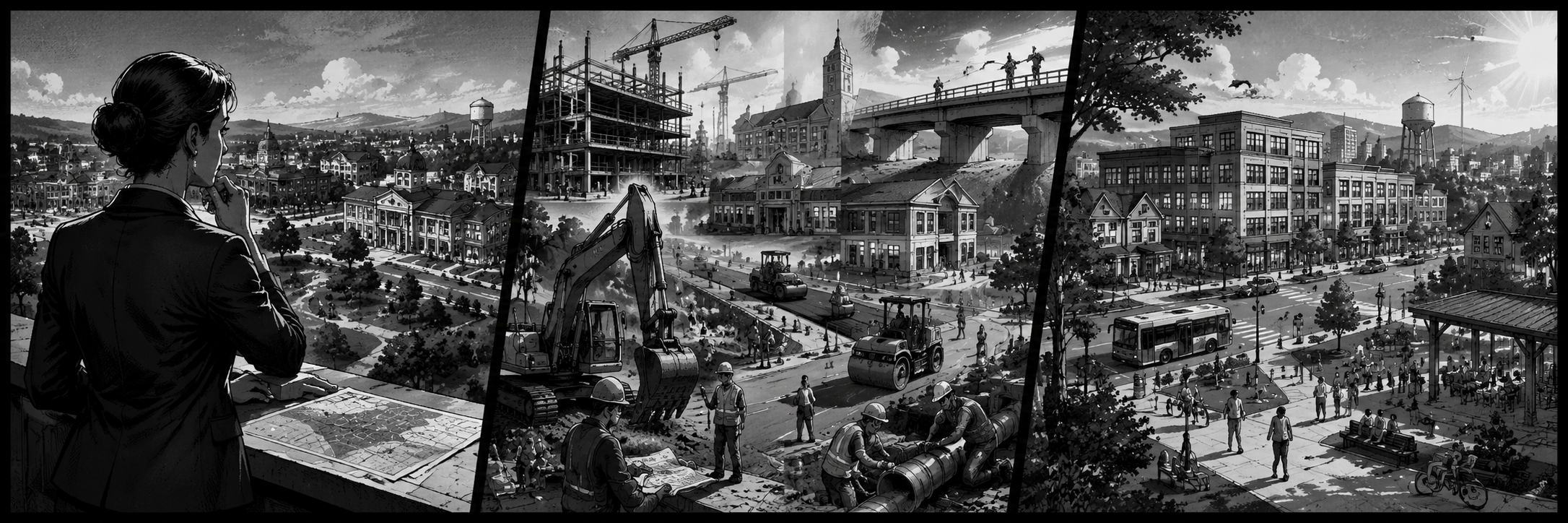
Kommunale infrastrukturutgifter er eit av dei mest innverknadsfylte områda i lokalpolitikken, men dei fleste innbyggjarar har liten forståing for korleis desse midlane vert fordelte. Å forstå fordelinga kan hjelpa deg med å engasjera deg meir effektivt i lokalpolitikken og forutsjå endringar i nabolaget ditt.
Vatn- og avløpssystem tek vanlegvis den største delen — ofte 30–40 % av infrastrukturbudsjetta. Desse underjordiske systema krev konstant vedlikehald og periodisk utskifting, og kostnadene er i stor grad usynlege inntil noko sviktar. Vedlikehald og bygging av vegar utgjer vanlegvis ytterlegare 25–35 %, og dekkjer alt frå grøptefylling til nye vegprosjekt.
Infrastruktur for kollektivtransport, inkludert busstopp, kollektivstasjonar og eigne felt, varierer mykje mellom kommunar. Byområde brukar kanskje 15–20 % på kollektivtransport, medan forstadskommunar løyver langt mindre. Parker og rekreasjonsanlegg mottek generelt 5–10 %, sjølv om dette varierer etter lokale prioriteringar.
Nyare tendensar viser auka tildeling til overvasshandtering og klimatilpassingsinfrastruktur. Mange kommunar investerer i grøn infrastruktur — biogrøfter, permeable dekke og urbane trerekker — som tener fleire føremål og reduserer langsiktige kostnader.
Når kommunen din publiserer årsbudsjettet sitt, bør du sjå etter investeringsplanen (økonomiplan). Dette flerårige dokumentet skisserer planlagde prosjekt og finansieringskjelder, og gjev deg eit førehandsinnblikk i kva som kjem til ditt område.
Municipal infrastructure spending is one of the most impactful areas of local government, yet most residents have little understanding of how these funds are allocated. Understanding the breakdown can help you engage more effectively in local politics and anticipate changes to your neighborhood.
Water and sewer systems typically consume the largest share — often 30–40% of infrastructure budgets. These underground systems require constant maintenance and periodic replacement, and the costs are largely invisible until something fails. Road maintenance and construction usually accounts for another 25–35%, covering everything from pothole repairs to new road construction projects.
Public transportation infrastructure, including bus stops, transit stations, and dedicated lanes, varies significantly by municipality. Urban areas might spend 15–20% on transit, while suburban communities allocate much less. Parks and recreational facilities generally receive 5–10%, though this varies based on community priorities.
Recent trends show increasing allocation toward stormwater management and climate adaptation infrastructure. Many municipalities are investing in green infrastructure — bioswales, permeable pavement, and urban tree canopies — that serve multiple purposes while reducing long-term costs.
When your municipality publishes its annual budget, look for the capital improvement plan (CIP). This multi-year document outlines planned projects and their funding sources, giving you a preview of what's coming to your area.